
The safest default for most beginners is a thick, water-based anal gel; a high-quality silicone lube is a solid second choice when you’re not using silicone toys. Either way, never use products with numbing or warming agents, and always check condom and toy compatibility before you start.
- Using condoms? Go water-based or silicone. Oil degrades latex and polyisoprene on contact.
- Using silicone toys? Stick to water-based gel, or patch-test silicone lube first.
- Longer sessions? Silicone lasts longest, but keep water-based on hand to reapply.
Skip anything promising “extra sensation,” tingling, or numbing. These mask pain signals your body needs, and sharp pain means stop immediately.
Key Takeaways
A thick, water-based anal gel is the safest default lube for beginners, and avoiding numbing agents and checking condom or toy compatibility prevents the most common injuries.
| Point | Details |
|---|---|
| Default to water-based gel | Thick, fragrance-free water-based formulas suit beginners, condoms, and every toy material. |
| Match lube to condoms | Oil-based lube degrades latex and polyisoprene condoms within minutes; use water-based or silicone instead. |
| Avoid numbing ingredients | Skip products with numbing, tingling, or strong warming claims, as they can mask injury. |
| Patch-test new formulas | Test any new lube on your arm 24 hours before anal use to catch irritation early. |
| Shop tested formulas | Wickedpixieclub’s lubricants collection stocks water-based and silicone options already checked for condom and toy compatibility. |
Table of Contents
- Types of anal lube: water-based, silicone, oil and hybrid formulas
- How do you use anal lube safely?
- Which lubes are compatible with condoms and toys?
- What should beginners look for when buying anal lube?
- How do you clean and store anal lube properly?
- How does Wickedpixieclub test and choose its lubricants?
- Where can you find beginner-friendly anal lube?
- Frequently asked questions
- Sources
Types of anal lube: water-based, silicone, oil and hybrid formulas
The rectum has no natural lubrication of its own, unlike the vagina, so whatever you bring is doing all the work. That single fact explains why anal lube guides insist on thicker, longer-lasting formulas than most vaginal lubes offer.
Water-based thick gels
These are the workhorse of anal play: they feel close to natural slickness, wash off with water alone, and stay compatible with every condom material and every toy, from silicone to glass. The trade-off is that thin water-based formulas dry out faster than a longer session needs, which is why anal-specific gels are usually formulated thicker and stickier than a standard bedside bottle.
- Pros: condom-safe, toy-safe across all materials, easy clean-up, widely available
- Cons: needs reapplication more often than silicone; some contain glycerin, which can irritate sensitive users
Silicone-based lube
Silicone lube stays slick far longer than water-based gel and shrugs off water, making it the better pick for shower play or extended sessions. It’s condom-safe with latex and polyisoprene.
- Pros: long-lasting, waterproof, needs less reapplication
- Cons: degrades silicone toys over time, harder to wash off (needs soap), can stain fabric
Oil-based lube
Oil-based products, including many massage oils and kitchen oils, feel rich and cushioning, but they are the one category that’s genuinely risky here. Studies on lubricant and condom compatibility confirm oil breaks down latex and polyisoprene within minutes, so it’s a non-starter with condoms.
- Pros: very long-lasting, deeply cushioning
- Cons: unsafe with latex/polyisoprene condoms, stains sheets and clothing, harder to clean internally
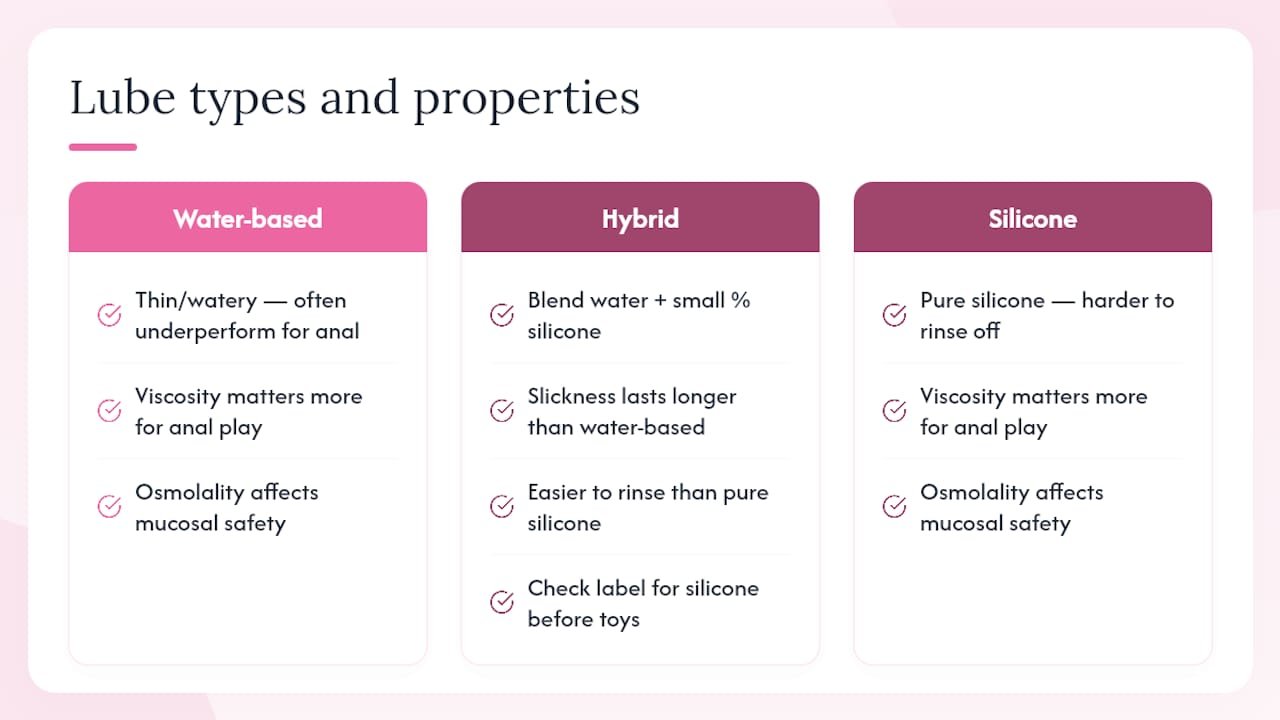
Hybrid lube
Hybrids blend water and a small percentage of silicone to get slickness that lasts longer than pure water-based gel while remaining easier to rinse off than pure silicone. They’re a reasonable middle ground, though check the label for silicone content before pairing with silicone toys.

Viscosity, or how thick and slow-flowing a lube is, matters more for anal play than for almost any other kind of lubrication. A review of personal lubricant formulations identifies viscosity alongside osmolality as the two properties that most influence comfort and mucosal safety, which is exactly why thin, watery lubes marketed for general use often underperform here.
Pro Tip: Pick one “house” anal gel you trust and stick with it for a few sessions before trying anything new. When you do try a new formula, dab a small amount on your inner arm or wrist and wait 24 hours to check for redness or itching before using it anally.
How do you use anal lube safely?
More lube, applied more often, beats a “little bit” every time. Anal tissue tears more easily than vaginal tissue when friction outpaces lubrication, so generosity here isn’t excess, it’s the whole point.
- Prepare: wash hands and toys, and have your lube within easy reach before you start.
- Apply: use a generous amount directly on fingers, the toy, or the entry point. Warm it slightly between your palms first if the bottle feels cold.
- During use: go slowly at first and check in with your body or your partner every few minutes.
- Reapply: the moment things feel less smooth, stop and add more. Don’t push through friction.
- Aftercare: clean toys and skin promptly (see cleaning guidance below).
- Do use more than feels necessary; don’t ration it to “save” product.
- Do communicate pace with a partner; don’t rush penetration.
- Don’t reuse lube that’s touched skin back into a shared bottle; decant instead.
Applying lube directly to a toy works well for solo play, while partnered sessions benefit from applying to both the toy or fingers and the entry point. Our guide to creative foreplay has useful pacing tips if this is new territory for you.
Which lubes are compatible with condoms and toys?
Getting this wrong is the single most common (and avoidable) mistake in anal play. Get it right, and both pleasure and safety follow naturally.
- Latex or polyisoprene condoms: water-based or silicone lube only, never oil.
- Silicone toys: water-based lube is always safe; patch-test silicone lube on an inconspicuous spot first, since some formulas degrade silicone over repeated use.
- Glass, steel, or ceramic toys: compatible with water-based, silicone, or oil-based lube.
Ingredients worth avoiding entirely for anal use include numbing agents (lidocaine or benzocaine), strong warming or tingling additives, and, for sensitive users, high concentrations of glycerin. Clinical safety reviews of topical numbing products note these agents can mask tissue damage as it’s happening, and separate lab work on rectal epithelial responses to lubricants has linked certain additive-heavy, high-osmolality formulas to increased signs of tissue disruption.
Some people react to common preservatives or glycerin in intimate products, which is why a 24 hour patch test before first use is worth the small delay it costs you.
What should beginners look for when buying anal lube?
Read the label before you read the marketing copy. A few checks take thirty seconds and rule out most bad purchases.
- Water or aqua listed first on the ingredients
- Labelled “thick,” “gel,” or “anal” rather than a thin general-purpose formula
- Fragrance-free unless you’ve already confirmed you tolerate scented formulas well
- No numbing, warming, or tingling claims anywhere on the packaging
- Confirmed condom and toy compatibility printed on the bottle
- Intact seal and clean applicator at the point of purchase
Pick a mid-sized bottle rather than the smallest trial size or the largest bulk bottle for your first purchase. That way you can properly judge feel and longevity without over-committing or running out mid-session. Once you’ve settled on a water-based house gel, consider a bottle of silicone lube as backup for longer or water-based sessions. Our guide to sex toy buying covers material compatibility if you’re building a collection alongside your lube choice.
How do you clean and store anal lube properly?
- Water-based residue rinses away with warm water alone, on skin or toys.
- Silicone residue needs mild soap and water, since water alone won’t fully lift it.
- Oil-based residue needs soap, and possibly a second wash for toys with textured surfaces.
- Keep bottles capped tightly, stored somewhere cool and dry, away from direct sunlight.
- Check the batch code and expiry date; discard anything past its date.
- If irritation appears, rinse the area with water immediately, stop using that product, and switch to a plain, fragrance-free water-based gel. Persistent redness or discomfort beyond a day or two warrants a chat with a GP or sexual health clinic.
How does Wickedpixieclub test and choose its lubricants?
Every lube in the Wickedpixieclub collection goes through sensory checks (viscosity, tackiness, how long it stays slick), safety checks (ingredient review against known irritants), and usability checks on the applicator and cap hygiene before it’s stocked. Nine years of curating sexual wellness products has shaped a fairly blunt house rule: if a formula needs a warning label to explain what it does to your skin, it doesn’t make the cut.
The best lube is the one that disappears from your attention entirely, no stinging, no tackiness, no second-guessing whether it’s still working.
Look for ethically sourced ingredients and clear, honest labelling rather than vague “premium” claims with no ingredient transparency. Our guide to sexual health and wellness covers the broader safety principles behind these choices in more depth.
A practical note on choosing well
Most beginners overthink ingredient lists and underthink quantity and patience. A thick, water-based gel, used generously and reapplied often, solves more problems than any exotic formula. Go slowly, talk to your partner, and don’t be afraid to stop and add more lube mid-session. For more on pacing and comfort, our tantric sex guide is worth a read.
Where can you find beginner-friendly anal lube?
Wickedpixieclub’s lubricants collection is built around exactly the formulas this guide recommends: thick water-based gels as a safe first buy, plus silicone options for longer sessions, all reviewed against the compatibility and ingredient checks covered above. Unlike shelves of generic drugstore lube with vague labelling, every product here has already been checked for condom and toy safety, so you’re not decoding ingredient lists at the till.

If you’re not sure where to start, smaller bottles reduce the commitment of trying a new formula, so you can test fit and feel before buying a larger size. Our sexual health and wellness guide pairs well with your first purchase if you want the safety principles alongside the shopping. Head to the collection, pick a fragrance-free water-based gel to start, and add a silicone option once you know what suits you.
Frequently asked questions
What’s the best anal lube for beginners?
A thick, fragrance-free water-based gel is the best anal lube for most first-timers, since it’s condom-safe, toy-safe with every material, and easy to clean up.
Is silicone or water-based lube better for anal sex?
Silicone lasts longer and resists water, making it better for extended or shower sessions, but water-based gel is easier to clean and safe with silicone toys, which makes it the more versatile everyday choice.
Can you use regular lube for anal sex?
Many water-based and silicone vaginal lubes work anally too, but thinner formulas dry out faster than anal play typically needs, so a thicker, anal-specific gel usually performs better.
Why shouldn’t you use numbing lube for anal sex?
Numbing agents mask pain that signals tissue damage, which raises the risk of injury without you noticing until afterwards.
How much anal lube should you use?
More than feels necessary, applied generously at the start and reapplied at the first sign of friction or resistance.
This article is general information, not a substitute for advice from a qualified doctor. Consult a qualified healthcare professional about your own circumstances before acting on anything here.
Sources
- PMC article (review) on personal lubricants and mucosal health
- PubMed: lubricant–condom compatibility studies

